

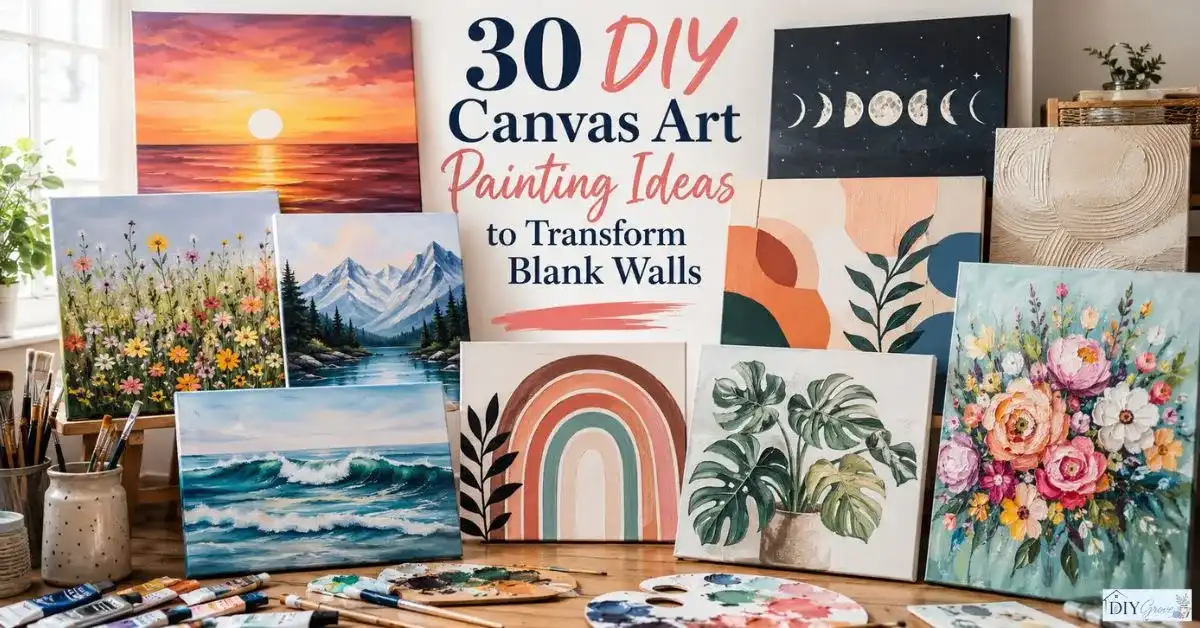
A blank canvas can become so much more than a simple piece of fabric. With a few acrylic paints, basic brushes, and a little creativity, DIY canvas art painting lets you create beautiful wall decor that feels personal and unique. Whether you love calming landscapes, colorful florals, modern abstracts, or simple minimalist designs, there is an idea to match your style.
You do not need professional painting skills to get started. These beginner friendly projects make it easy to experiment with colors, textures, and creative techniques while adding personality to your home. Grab your favorite canvas and paints, then turn your next creative afternoon into artwork you will love displaying.
Easy DIY Canvas Art Painting Ideas
1. Sunset Gradient Canvas

A sunset gradient is one of the easiest ways to create canvas art that looks impressive without requiring advanced painting skills. Start with a light yellow near the center of the horizon, then gradually blend coral, pink, and purple toward the top. Work while the paint is slightly wet so the colors transition smoothly instead of creating harsh lines.
For an extra polished finish, add a simple black or deep purple silhouette along the bottom, such as distant trees, rolling hills, or a tiny house. Tip: Use a clean, slightly damp brush for blending and build the colors gradually. This idea works especially well as bedroom, living room, or dorm room wall art.
2. Simple Abstract Line Art

Simple abstract line art is a great choice when you want modern canvas wall art without complicated painting techniques. Begin with a soft neutral background, then use a thin brush and dark acrylic paint to create continuous flowing lines. Try drawing an abstract face, curved botanical shapes, or overlapping organic forms.
Keep the design intentionally simple instead of filling every part of the canvas. Tip: Lightly sketch your main curves with a pencil first, then paint over them once you are happy with the placement. A neutral palette with black, beige, terracotta, or muted brown works beautifully with modern American home decor.
3. Colorful Geometric Shapes

Geometric canvas art lets you play with color while keeping the actual painting process simple. Sketch several circles, arches, triangles, or rectangles across the canvas, then fill each shape with a different color. You can create a balanced design with symmetrical shapes or make it more playful with overlapping forms.
For crisp edges, use painter’s tape around sections that need clean boundaries and let each color dry before adding another shape. Tip: Choose three to five coordinating colors before you begin. Repeating one or two colors throughout the canvas will make the finished piece feel intentional rather than chaotic.
4. Minimalist Mountain Landscape

A minimalist mountain landscape creates peaceful wall art with just a few simple shapes and colors. Paint a soft background sky first, then add distant mountain layers using increasingly darker shades as you move toward the foreground. You can finish with a small sun, a few pine trees, or a simple lake reflection.
Keep the mountain shapes slightly uneven to give the painting a natural handmade appearance. Tip: Muted greens, dusty blues, beige, and gray create a calm look that works beautifully in bedrooms, offices, and living spaces. For an even easier version, use broad mountain silhouettes instead of detailed peaks.
5. Easy Wildflower Canvas

An easy wildflower canvas is perfect for beginners because the flowers do not need to look perfectly symmetrical. Paint a soft cream or pale blue background, then use thin green strokes for stems and small brush dabs for petals. Mixing different flower shapes makes the finished artwork feel more natural and handmade.
Tip: Use three or four flower colors that complement each other instead of trying to use every shade in your paint collection. Add a few tiny leaves and unopened buds between the larger blooms to give the canvas more depth. This style looks especially pretty as kitchen, bedroom, or entryway wall art.
6. Painted Rainbow Arch

A painted rainbow arch adds a cheerful touch to a room while remaining simple enough for a beginner to create. Lightly sketch several nested arches across the canvas, then paint each section in a coordinating color. Soft, muted shades create a modern look, while brighter colors can make the artwork feel more playful.
Let each painted band dry before adding the next one, especially if you are using contrasting colors. Tip: Keep the arches evenly spaced for a clean finish, and use painter’s tape around the outer edges if you want sharper lines. This design works beautifully for nurseries, kids’ rooms, playrooms, and colorful gallery walls.
“If little ones want to join the creative fun too, these paper plate crafts for kids are a simpler, mess-friendly way to let them make their own colorful art.”
7. Simple Moon and Stars Canvas

A moon and stars canvas is an easy way to create dreamy celestial wall art with only a few basic shapes. Cover the canvas with deep blue or indigo paint, blending slightly lighter shades around the moon. Once the background is completely dry, add a crescent moon and small stars using white, cream, or soft gold paint.
For more visual interest, vary the size of the stars instead of making them identical. Tip: Use the end of a small brush or a cotton swab to create tiny star dots quickly and evenly. A subtle cluster of stars around the moon can become the focal point without making the painting feel overcrowded.
8. Ombre Heart Canvas

An ombre heart canvas is a simple project that creates a soft, polished look with just a few shades of the same color. Lightly sketch a heart in the center of the canvas, then paint the darkest shade along one edge and gradually blend into lighter shades as you move across the shape.
Allow the layers to dry slightly before adding more color so the heart keeps its defined shape. Tip: Choose three or four shades from the same color family for a smooth transition. Leave plenty of empty space around the heart to give the finished artwork a clean, modern appearance.
9. Easy Dot Art Canvas

Dot art is an approachable canvas painting technique because you can build an attractive design without drawing complicated shapes. Start with a solid background, then create a central dot and work outward with small groups of dots. Varying the dot sizes creates a layered pattern that can resemble flowers, mandalas, or abstract circles.
Tip: Use the rounded end of a paintbrush, cotton swabs, or inexpensive dotting tools to make consistent circles. Practice your dot sizes on scrap paper first, then keep the spacing fairly even as you move outward. This technique is also a fun way to use leftover acrylic paint colors.
10. Minimalist Sun Canvas

A minimalist sun canvas can brighten a room without overwhelming the surrounding decor. Paint the canvas in a soft neutral shade, then add a simple circle in terracotta, ochre, or warm golden yellow. Finish with short rays extending outward from the center, keeping their placement relaxed and slightly organic.
Tip: You do not need a perfectly round circle to achieve a beautiful handmade result. A lightly imperfect shape can make the artwork feel more authentic. Pair warm sun colors with a cream, beige, or light blue background for an easy piece that works well with modern, boho, and minimalist interiors.
Nature Inspired Canvas Painting Ideas
11. Misty Forest Landscape

A misty forest landscape can look detailed and atmospheric without requiring precise painting skills. Start with a pale gray blue background, then gradually add tree shapes using lighter shades in the distance and darker greens closer to the foreground. This layering creates the illusion of depth while keeping the painting relatively simple.
Tip: Keep distant trees soft and slightly faded rather than outlining every branch. Use a dry brush with a small amount of light paint to create the hazy effect between the tree layers. The finished canvas makes a peaceful addition to a bedroom, reading corner, or home office.
12. Lavender Field Canvas

A lavender field is a beautiful canvas idea when you want soft colors and a peaceful landscape. Paint a light blue or warm cream sky first, then create several rows of purple lavender that become smaller as they approach the horizon. Add green stems and individual flower details mainly in the foreground.
Tip: Slightly vary the purple shades instead of using one color throughout the entire field. Soft lavender, violet, and dusty purple can make the flowers look more dimensional. A warm yellow or peach sunset near the horizon can also give the painting a gentle glow.
13. Cherry Blossom Branch Painting

A cherry blossom branch painting brings a soft spring inspired look to a blank wall without requiring an entire landscape. Paint a few flowing brown branches across the canvas, allowing them to curve naturally rather than following perfectly straight lines. Add small clusters of pink and white blossoms along the branches using gentle brush dabs.
Tip: Keep some areas of the branches visible instead of covering everything with flowers. Combining larger blossoms with tiny buds and scattered petals will give the design a more natural appearance. A pale blush, cream, or light blue background works especially well for this delicate canvas art style.
14. Ocean Wave Canvas

An ocean wave canvas can bring a fresh coastal feeling into your home while giving you plenty of room to experiment with brushwork. Start with several blue and turquoise shades across the background, then build the wave using curved strokes that follow its natural movement. Add white foam near the crest and along the lower edges to create contrast.
Tip: Avoid blending every color completely. Leaving some individual strokes visible can make the water look more energetic and realistic. For a softer coastal style, use pale aqua and seafoam, while deeper navy and turquoise create a more dramatic statement piece.
15. Tropical Leaf Canvas

A tropical leaf canvas is an easy way to add a botanical accent without painting an entire garden scene. Use a light neutral background, then sketch several large leaf shapes with different sizes and angles. Fill them with layered green shades and add simple veins once the base colors have dried.
Tip: Overlap a few leaves to create depth, but leave enough background visible to keep the design clean. Mixing dark green with sage and olive tones will give the leaves more dimension. This artwork works especially well in living rooms, bedrooms, bathrooms, and home offices.
16. Mushroom Forest Painting

A mushroom forest painting lets you combine simple woodland shapes with playful colors. Begin with a deep green or earthy forest background, then add tree trunks and layers of foliage to create depth. Paint clusters of mushrooms in different sizes across the foreground, using rounded caps and simple stems that are easy for beginners to recreate.
Tip: Use a few warm mushroom colors against cooler greens to make the tiny details stand out. Adding small ferns, moss, fallen leaves, or scattered dots around the mushrooms can make the scene feel more complete without requiring intricate painting techniques.
17. Mountain Lake Landscape

A mountain lake landscape combines simple shapes with beautiful layers, making it a rewarding canvas project for beginners. Paint the sky first, followed by distant mountains in lighter shades and darker peaks closer to the foreground. Add the lake beneath them and use horizontal strokes to create soft reflections.
Tip: Keep the reflections slightly less detailed than the mountains so the water looks naturally calm. Muted blue, sage green, gray, and warm beige create a peaceful color palette that suits bedrooms, living rooms, and home offices. A few small pine trees along the shoreline can add scale and depth.
18. Sunflower Field Canvas

A sunflower field canvas is a cheerful project that can instantly add warmth to a room. Begin with a simple sky and distant field, then paint the green stems and leaves before adding the yellow flower heads. Make the foreground sunflowers larger and more detailed while keeping the distant flowers smaller.
Tip: Mix several shades of yellow, such as golden yellow, ochre, and warm lemon, instead of relying on one flat color. Add darker brown centers and a few curved leaves to give the flowers more dimension. This painting works especially well for kitchens, dining areas, entryways, and sunny living spaces.
Creative Abstract Canvas Art Ideas
19. Textured Neutral Abstract Canvas

A textured neutral abstract canvas is ideal when you want wall art that feels modern without relying on bright colors. Start with a warm cream or beige base, then build organic shapes using thicker acrylic paint. A palette knife can create raised areas, while a dry brush can add softer transitions between the layers.
Tip: Stay within a small family of neutral shades so the texture becomes the main focus. You can create curved lines, arches, uneven blocks, or soft overlapping shapes depending on your decor. Let each layer dry before adding more texture to prevent the colors from becoming muddy.
20. Bold Color Block Canvas

Bold color block art is a simple way to create a statement piece using strong shapes and confident colors. Divide the canvas into several sections using circles, arches, rectangles, or freeform blocks, then fill each area with a contrasting shade. Keeping the shapes large makes the finished artwork easier to paint and visually striking.
Tip: Choose one dominant color and use two or three supporting shades to keep the composition balanced. Painter’s tape can help create sharp edges, while slightly imperfect hand painted shapes can give the piece a more artistic feel. This style pairs particularly well with contemporary, eclectic, and colorful interiors.
21. Abstract Floral Brushstrokes

Abstract floral brushstrokes let you create recognizable flowers without worrying about realistic petals or perfect shapes. Paint a neutral background first, then use broad brushstrokes to suggest flower heads, leaves, and stems. Layer lighter and darker colors over the initial shapes to give the blooms more depth.
Tip: Vary your brush pressure and direction so every flower does not look identical. Leave some open space between the blooms to keep the artwork airy and modern. A palette of dusty pink, lavender, sage, cream, and muted blue creates a soft botanical look that works beautifully in bedrooms and living spaces.
22. Swirling Color Wave Canvas

A swirling color wave canvas is perfect when you want energetic abstract art without having to paint recognizable objects. Begin with several curved lines across the canvas, then fill the spaces between them with coordinating colors. Let the shapes overlap slightly so the composition feels fluid rather than rigid.
Tip: Keep your brushstrokes moving in the same general direction to create a stronger sense of flow. Use one neutral shade, such as cream or white, between brighter colors to prevent the palette from becoming overwhelming. Slightly uneven curves can make the finished artwork feel more expressive and handmade.
23. Metallic Gold Line Abstract

Metallic gold line art can turn a simple abstract background into an elegant decorative canvas. Paint the base in a soft neutral shade such as ivory, beige, or pale gray, then allow it to dry completely. Use a fine brush to add flowing gold lines, curved shapes, or simple geometric details across selected areas.
Tip: Less gold usually creates a more sophisticated result. Instead of covering the entire canvas, let a few carefully placed metallic lines become the focal point. If you are using metallic acrylic paint, apply thin layers and allow them to dry so the gold remains crisp and reflective.
24. Layered Paint Texture Canvas

Layered paint texture creates dimension by allowing each color and mark to remain visible beneath the next. Start with a simple background color, then add broad strokes, blocks, or organic shapes using thicker acrylic paint. Once a layer dries, build another color over selected areas rather than covering the entire canvas.
Tip: A palette knife is especially useful for creating raised ridges and scraped sections. Do not try to make every area perfectly smooth. The combination of rough texture, visible brush marks, and overlapping colors is what gives this type of abstract canvas its character.
25. Pink and Orange Abstract Art

Pink and orange create a warm, cheerful combination that works beautifully for modern abstract canvas art. Begin with a soft cream background, then add large pink and orange shapes using curved brushstrokes. Layer lighter peach and blush tones over parts of the design to create variation without making the canvas too busy.
Tip: Use cream or another soft neutral shade to give the brighter colors room to breathe. Combining large shapes with a few smaller brush details can create a balanced composition. This color palette is especially fitting for bedrooms, creative spaces, and sunny gallery walls.
“If you enjoy adding handmade art around the house, pair this piece with a few suncatcher DIY ideas to bring the same celestial charm to a sunny window.”
Statement and Decorative Canvas Ideas
26. Boho Arched Rainbow Canvas

A boho arched rainbow canvas brings warmth and personality to a room while remaining simple enough for beginners. Sketch several curved arches across the canvas, then fill each section with muted earthy colors. Slightly irregular edges can give the artwork a relaxed handmade appearance.
Tip: Keep the palette warm and earthy for a classic boho look. Terracotta, mustard, sage, dusty pink, and cream work especially well together. Leave a generous amount of neutral background visible so the arches remain the main focal point.
27. Celestial Moon Phase Canvas

A celestial moon phase canvas makes a striking decorative piece with a simple repeating composition. Paint the background in deep navy, charcoal blue, or another dark shade and let it dry completely. Then arrange the moon phases across the center, using cream, ivory, or metallic gold to make them stand out.
Tip: Lightly mark the position of each moon phase before painting so the spacing stays balanced. Add only a few tiny stars around the design to keep the artwork elegant rather than crowded. This idea works especially well above a bed, reading nook, or home office.
28. Painted Woman Silhouette Canvas

A painted woman silhouette can become a beautiful statement piece without requiring realistic portrait painting skills. Start with a simple neutral background, then lightly sketch a side profile or flowing figure before filling it with a single dark color. Add loose botanical shapes or soft abstract accents around the silhouette for extra character.
Tip: Keep the main silhouette simple and recognizable rather than adding too many facial details. A limited palette of charcoal, cream, blush, and terracotta can create a sophisticated look. This design pairs especially well with modern, boho, and minimalist bedroom decor.
29. Modern Botanical Face Canvas

A modern botanical face canvas combines simple portrait shapes with leafy details for a distinctive piece of decorative wall art. Begin with a soft cream or beige background, then sketch a simplified face using flowing curves instead of detailed facial features. Add botanical stems and leaves around the face so the natural elements become part of the design.
Tip: Use a limited palette of cream, terracotta, sage, and muted brown to keep the artwork cohesive. You do not need to paint realistic facial features. A few carefully placed lines can suggest the eyes, nose, and lips while allowing the botanical elements to remain the main focus.
30. Oversized Colorful Floral Canvas

An oversized floral canvas makes a strong focal point and gives you plenty of freedom to work with expressive brushstrokes. Paint a few large flowers rather than filling the canvas with many tiny blooms. Build each flower with overlapping petals in different shades, then add darker centers and loose green leaves around them.
Tip: Let some flowers extend toward the edges of the canvas for a more dramatic composition. Use contrasting colors such as coral with blue, pink with yellow, or orange with lavender to make the artwork stand out. A large floral painting can instantly bring personality to a living room, dining area, bedroom, or entryway.
“If you’re drawn to dreamy, storybook style art like this, you’ll also love the whimsical vibe of these DIY Alice in Wonderland decorations for your next themed event.”
Conclusion
Creating DIY canvas art painting is a fun way to bring personality, color, and creativity into your home without needing professional painting skills. From peaceful landscapes and delicate florals to bold abstracts and modern decorative designs, there is an idea here for every style and comfort level.
Pick your favorite canvas, gather your paints, and start with a simple design that inspires you. Save this list for your next creative weekend, share it with a fellow DIY lover, and turn a blank canvas into something you’ll be proud to display!