

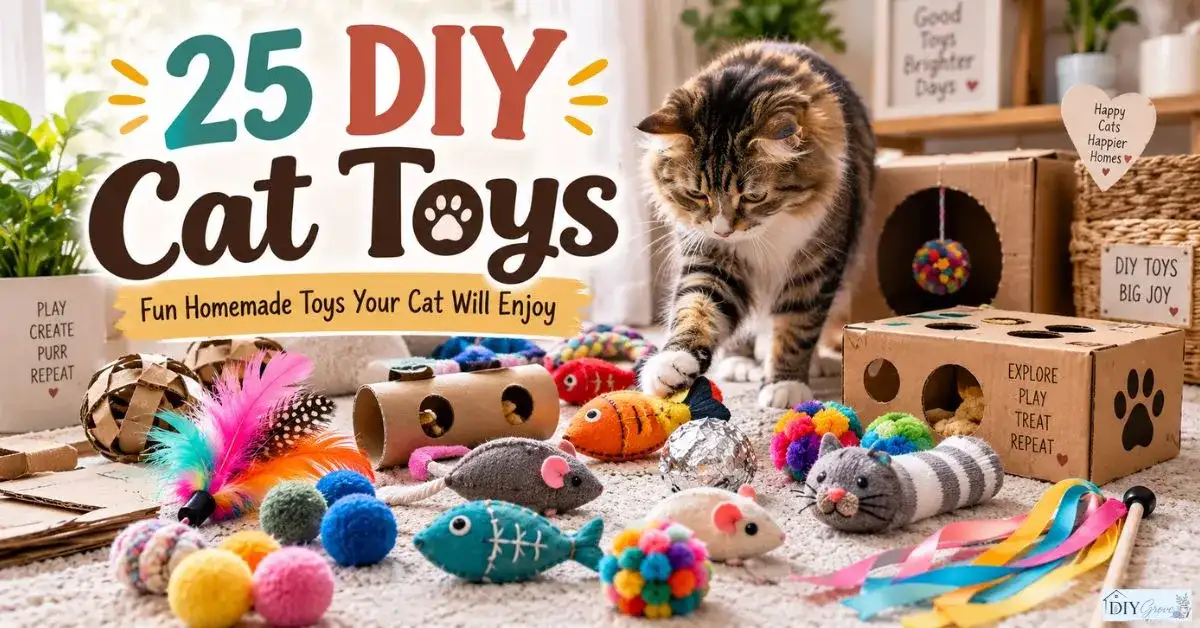
If your cat gets bored with the same store bought toys, DIY cat toys can bring fresh excitement to everyday playtime without costing much. From cardboard puzzles and soft catnip toys to playful wands and crinkle balls, simple household materials can become engaging activities your cat will love. These homemade ideas are easy for beginners, fun to create, and perfect for keeping indoor cats active and curious.
You can also customize each toy around your cat’s favorite way to play, whether they love chasing, batting, hiding, or solving little puzzles. With a few basic supplies and some creativity, you can make playtime more interesting while giving your cat plenty of reasons to stay engaged.
1. Cardboard Tube Treat Roller

A cardboard tube can become a surprisingly engaging treat puzzle with almost no crafting experience required. Cut a few small openings around a clean cardboard tube, making sure the holes are large enough for treats to come out without creating sharp edges. Add a small amount of your cat’s favorite dry treats, then place the tube on the floor and let your cat figure out how to roll it.
This DIY cat toy works especially well for cats that enjoy batting, chasing, and food based puzzles. Start with larger openings so the treats are easy to release, then make the challenge slightly harder if your cat quickly solves it. Always supervise your cat during play and discard the tube once it becomes torn, soggy, or small enough to swallow.
2. Felt Fish With Catnip

A felt fish is an easy DIY cat toy that adds a little more variety to your cat’s playtime. Cut two matching fish shapes from sturdy felt, stitch most of the edges together, and leave a small opening for filling. Add a modest amount of catnip, then securely stitch the opening closed. Keep the design simple so there are no loose decorations your cat could pull off.
This toy is great for cats that enjoy batting, carrying, and kicking soft toys around. If your cat is new to catnip, start with a small amount because some cats respond more strongly than others. Use tightly secured stitching and check the toy regularly for holes or loose pieces.
3. Feather and Stick Chase Toy

For a toy that encourages chasing and jumping, turn a simple stick into an interactive feather teaser. Use a smooth wooden dowel and attach a short, sturdy cord with the feathers secured firmly at the end. Keep the cord short enough to control easily, and avoid adding tiny bells, beads, or other pieces that could become loose during play.
Move the feather toy slowly across the floor, then lift it gently to encourage your cat to stalk, pounce, and jump. This type of toy should always be used during supervised play and stored away afterward. Replace the toy immediately if the feathers, cord, or attachment begin to loosen.
4. Crinkle Paper Ball

A crinkle paper ball is one of the simplest DIY cat toys to make when you want something lightweight and entertaining. Use plain, non glossy paper and gently crumple it into a loose ball that makes an interesting sound when your cat bats it across the floor. Avoid tape, staples, plastic wrapping, glitter, or anything else that could break away.
The unpredictable movement and soft crinkling sound can make an ordinary paper ball surprisingly fun for curious cats. Make several small balls for supervised play and replace them when they become torn or soggy. Choose paper without coatings, ink that could transfer easily, or small pieces that might be swallowed.
5. Sock Filled Cat Toy

A clean cotton sock can quickly become a soft homemade toy with very little effort. Fill the sock with small pieces of clean fleece or cat safe stuffing, then tie the opening into a secure knot. Keep the toy lightweight and avoid adding buttons, beads, plastic pieces, or other decorations that could become choking hazards.
This DIY cat toy is especially useful for cats that like to grab, kick, and carry soft objects. Give the finished toy a gentle squeeze to make sure the knot is secure before play. Inspect it often and replace it if the fabric becomes torn or the filling starts coming loose.
6. Cardboard Box Peekaboo Toy

Turn an ordinary cardboard box into an interactive hide and reach game your cat can explore. Cut several large openings into different sides of a sturdy box, making sure every opening is smooth and large enough for your cat’s paws. Place a lightweight toy inside and let your cat investigate, reach through the holes, and try to catch it.
The changing positions of the toy can encourage natural stalking and pouncing behavior while giving your cat a simple puzzle to solve. Remove packing tape, staples, plastic handles, and loose cardboard pieces before play. Replace the box when it becomes crushed, damp, or heavily chewed.
7. DIY Pom Pom Chase Ball

A pom pom chase ball gives cats something soft and lightweight to bat around the room. Create a compact pom pom using sturdy material, then trim the strands evenly so there are no long loose pieces. Make the finished ball firm enough to hold its shape and check that nothing can easily unravel during play.
Roll the pom pom across the floor to encourage your cat to chase, swat, and pounce. This toy is best for supervised play, especially if your cat likes chewing fabric or yarn. Inspect it after each session and replace it as soon as strands begin pulling loose.
8. T Shirt Knot Toy

An old cotton T shirt can be turned into a simple cat toy without much sewing or crafting. Cut several sturdy strips of fabric, braid them together, and tie the ends into secure knots. Keep the finished toy compact, and trim away any long loose strands that could become tangled around your cat’s paws or body.
This toy is a good choice for cats that enjoy grabbing, batting, and carrying soft objects. Choose a clean shirt made from durable fabric and avoid pieces with glued decorations, zippers, or small embellishments. Check the knots and fabric regularly, and replace the toy if it starts to unravel.
9. Hanging Ribbon Wand

A ribbon wand can turn simple fabric scraps into an exciting chase toy for interactive play. Attach a few short, sturdy fabric ribbons securely to the end of a smooth wooden dowel. Keep the ribbons short enough that they cannot easily wrap around your cat’s neck or legs, and avoid adding small bells, beads, or plastic decorations.
Move the wand across the floor or gently through the air to encourage stalking, chasing, and pouncing. Never leave a ribbon wand with your cat unattended. Store it somewhere your cat cannot access after play, and replace any ribbon that becomes frayed or detached.
10. Toilet Paper Roll Puzzle Toy

Save a few clean cardboard toilet paper rolls and turn them into a simple treat puzzle. Arrange the rolls upright inside a shallow cardboard box so they fit snugly, then place a few dry treats inside selected tubes. Your cat can reach between the rolls and work out where the treats are hiding.
Start with treats that are easy to access so your cat understands the game. Once your cat gets comfortable, vary the treat placement to make the puzzle more interesting. Use clean, dry cardboard without tape, staples, glue residue, or loose pieces, and supervise your cat while using the puzzle.
11. Denim Catnip Mouse

Turn an old pair of clean denim jeans into a durable little mouse your cat can bat, carry, and kick. Cut two simple mouse shapes from the denim, stitch them together while leaving a small opening, then add a little catnip and cat safe stuffing before securely closing the opening. Keep the shape simple and avoid adding plastic eyes, beads, buttons, or other detachable decorations.
The sturdy denim makes this homemade toy a nice option for cats that are rough with softer fabric toys. You can make several mice from one pair of jeans and vary the amount of catnip in each one. Check the stitching regularly and discard the toy if the denim tears or the filling becomes accessible.
12. Cardboard Spinner Toy

A cardboard spinner can give your cat a simple interactive activity that encourages pawing and curiosity. Cut a lightweight cardboard circle with several large openings, then attach it to a sturdy cardboard base in a way that allows controlled movement. Make sure there are no sharp edges, exposed staples, or small pieces that could break away.
Place the spinner on a stable floor and encourage your cat to tap it with a paw. You can make the activity more interesting by placing a lightweight toy behind one of the openings. Keep all moving parts large and secure, and supervise your cat to make sure the cardboard does not become a chewing hazard.
13. Yarn Tassel Chase Toy

A yarn tassel can add texture and movement to interactive play, but it needs to be made with extra attention to safety. Wrap sturdy yarn into a compact tassel, secure the center firmly, and trim the ends so there are no long strands that can easily wrap around your cat’s paws or body. Attach the tassel securely to a smooth wand for supervised play.
Move the toy gently across the floor and let your cat chase, pounce, and bat at the tassel. Never leave yarn toys available for unsupervised play, since loose strands can be swallowed or become tangled. Inspect the tassel before every session and replace it immediately if the yarn begins to unravel.
14. Paper Bag Hide and Pounce Toy

A plain paper grocery bag can become a fun little hideaway for cats that love exploring, hiding, and pouncing. Remove the handles completely, open the bag wide, and place it on a clear floor where your cat can easily enter and exit. You can toss a lightweight toy nearby to encourage your cat to peek out and chase it.
Keep the bag completely plain and free from staples, tape, plastic, or other decorations. Never tie or close the bag around your cat, and supervise play, especially if your cat likes chewing paper. Replace the bag when it becomes torn, damp, or heavily crumpled.
15. DIY Catnip Pillow

A small catnip pillow is an easy homemade toy that gives cats something soft to grab, kick, and cuddle. Cut two matching pieces of sturdy cotton fabric, sew around the edges while leaving a small opening, then add a little dried catnip and cat safe stuffing. Stitch the opening completely closed with secure seams.
Choose a durable washable fabric and keep the pillow small enough for your cat to carry comfortably. Some cats respond strongly to catnip while others show little interest, so start with a modest amount. Inspect the seams regularly and replace the pillow if your cat can access the filling or catnip.
16. Egg Carton Treat Puzzle

An empty cardboard egg carton can become a simple food puzzle that encourages your cat to use its paws and nose. Use a clean, dry carton with no remaining food residue, then place a few small dry treats inside different compartments. Set it on the floor and let your cat work out how to reach the treats.
For beginners, leave some treats partially visible so your cat understands the game quickly. As your cat becomes more confident, place treats deeper inside the compartments for a little extra challenge. Supervise the activity and discard the carton if your cat starts tearing off or swallowing pieces of cardboard.
17. Felt Butterfly Chase Toy

A felt butterfly adds a playful shape to interactive cat play while being simple enough for beginners to make. Cut two matching butterfly shapes from sturdy felt, stitch them together securely, and attach the finished piece to a smooth wand. Keep the design simple, with no buttons, beads, wire, or other small decorations that could come loose.
Move the butterfly across the floor and through the air to encourage your cat to stalk, chase, and pounce. Use this toy only during supervised play and store it away afterward. Check the stitching and attachment before each session, especially if your cat likes to bite or pull at toys.
18. Cardboard Ball Track

A cardboard ball track gives your cat something to chase while keeping the ball contained in one place. Use sturdy cardboard to create a shallow track with smooth, wide openings that allow your cat to reach the ball without getting its paw stuck. Secure the pieces firmly and check every edge for rough or sharp areas before introducing it to your cat.
Place a lightweight cat safe ball inside and encourage your cat to tap it around the track. The moving ball can keep curious indoor cats occupied while giving them a simple pawing activity. Avoid narrow gaps, loose cardboard pieces, and balls small enough to swallow. Replace the project when the cardboard becomes damaged.
19. Fleece Knot Ball

A fleece knot ball is a soft, lightweight toy that can be made from fabric scraps in just a few simple steps. Cut several sturdy fleece strips, layer or braid them together, and tie the center tightly to create a compact ball. Trim any excessively long ends so they cannot easily wrap around your cat’s paws.
Roll the finished ball across the floor and let your cat chase, swat, and carry it. Fleece is soft enough for gentle batting while adding an interesting texture to your cat’s toy collection. Supervise play and inspect the knots frequently. Replace the toy if the fleece begins to separate or small pieces become loose.
20. DIY Window Hanging Toy

A window hanging toy can add movement and enrichment to a cat’s favorite viewing spot. Attach a lightweight toy securely to a sturdy, cat safe window mount, keeping all dangling pieces short and firmly fastened. Position it near a stable cat perch where your cat can reach it without needing to climb onto an unsafe surface.
Choose a location where the toy will not interfere with blinds, cords, screens, or the window opening. Check the attachment regularly, since a loose suction cup or falling toy can startle your cat or create a safety issue. Keep the toy simple and replace it if any part begins to loosen.
“While you’re near the window, you can also add a few Suncatcher DIY ideas nearby to brighten up the same space with colorful light.”
21. Muffin Tin Treat Puzzle

A muffin tin can become a simple treat puzzle that encourages your cat to use its paws and nose to find hidden rewards. Start with a clean, dry muffin tin and place a few small treats in different cups. Leave some spaces empty so your cat has to investigate rather than simply following the smell of treats.
This DIY activity is easy to adjust for different skill levels. Begin by leaving treats partially visible, then make the puzzle more challenging by placing them deeper inside the cups. Use only a sturdy, clean tin and supervise your cat during play. Wash the tin thoroughly before using it for food again.
22. Paper Roll Feather Spinner

A cardboard paper roll can become a lightweight chase toy with a little movement added. Use a clean cardboard roll and attach a few sturdy feathers securely so they create an interesting fluttering effect when the roll moves. Keep the feathers firmly attached and avoid tape, staples, beads, bells, or other small decorations that could come loose.
Roll the spinner gently across the floor and let your cat chase and bat at it. This simple activity can add variety to playtime without requiring complicated crafting. Supervise your cat closely and inspect the feather attachment before every session. Replace the toy immediately if the cardboard becomes crushed or the feathers start coming loose.
23. Homemade Cat Wand With Bells

A homemade cat wand can make interactive play more exciting by combining movement with a gentle sound. Use a smooth wooden dowel and attach a short, sturdy cord to a lightweight fabric pouch containing a securely enclosed bell. The bell should never be exposed or loose, and there should be no small pieces your cat can pull off or swallow.
Move the wand slowly across the floor, then change direction to encourage stalking and pouncing. Always supervise your cat with wand toys and store the toy out of reach after play. Check the cord, pouch, and attachment before each session, and replace the toy if any part becomes loose.
24. Cardboard Scratcher and Toy Combo

Combine two favorite activities, scratching and batting, in one simple cardboard project. Cut clean strips of corrugated cardboard to fit snugly inside a sturdy base, arranging the corrugated edges upward so your cat can scratch against the textured surface. Place a lightweight toy beside the scratcher to encourage your cat to investigate and play.
Keep the scratcher stable so it does not slide across the floor when your cat uses it. Avoid exposed staples, sharp edges, loose strings, and small decorations. Replace the cardboard when it becomes heavily shredded or pieces begin breaking away.
25. DIY Interactive Box Puzzle

An interactive box puzzle can turn an ordinary cardboard box into a reusable source of mental stimulation. Cut several large openings into the box, making each one wide enough for your cat’s paw to move comfortably. Hide a lightweight toy or a few dry treats in different areas, giving your cat a reason to explore, reach, and investigate.
Change the toy or treat placement from time to time so the puzzle stays interesting. Start with easy to reach rewards, then gradually make the hiding spots more challenging as your cat learns how the game works. Keep the box free from staples, tape, plastic, sharp edges, and small loose parts, and supervise play. Replace the box when it becomes damaged or heavily chewed.
Common Mistakes to Avoid With DIY Cat Toys
Making DIY cat toys can be simple and budget friendly, but safety should always come first. A few small mistakes can turn a fun homemade toy into a potential hazard, so keep these points in mind.
• Using loose strings, ribbons, or yarn
• Adding small pieces your cat could swallow
• Leaving wand toys out during unsupervised play
• Using sharp cardboard edges or exposed staples
• Making toys with weak knots or loose stitching
• Using toxic glue, paint, or unsafe materials
• Keeping damaged or heavily chewed toys
• Making toys too small for your cat to handle safely
“Once your cat has plenty of toys to enjoy, you might also want to give them a safe outdoor spot to play, these catios ideas for cats are a great next project for any cat owner.”
Conclusion
Making DIY cat toys is a fun way to keep your cat active, curious, and entertained without spending much on store bought toys. From simple cardboard puzzles to soft catnip toys and interactive wands, there is an idea here for every playful personality.
Start with one easy project, watch what your cat enjoys most, and create more from there. Save this post to your Pinterest board, share it with another cat lover, and try your favorite DIY cat toy today for a happier playtime!
FAQs
What can I make for my cat with things at home?
You can make simple DIY cat toys from cardboard tubes, paper bags, old T shirts, socks, felt scraps, cardboard boxes, and paper. Always remove staples, tape, plastic, and small decorations before giving them to your cat.
What is the easiest DIY cat toy to make?
A crinkle paper ball is one of the easiest DIY cat toys. Simply crumple a piece of plain paper into a loose ball and let your cat bat it around during supervised play.
How do I make homemade cat toys safe?
Use sturdy, cat safe materials and avoid loose strings, ribbons, small parts, sharp edges, toxic adhesives, and easily swallowed pieces. Inspect homemade toys regularly and replace them when they become damaged.
What DIY toys can keep cats entertained indoors?
Interactive box puzzles, cardboard ball tracks, treat puzzles, feather wands, cardboard spinners, and peekaboo toys can provide engaging indoor play. Rotate different types to keep your cat interested.
Can I put catnip in homemade cat toys?
Yes, you can add a small amount of dried catnip to suitable homemade toys such as felt fish, catnip pillows, and fabric mice. Some cats do not respond to catnip, so their reaction can vary.
How often should I replace homemade cat toys?
Replace a DIY cat toy whenever it becomes torn, heavily chewed, unravelled, or develops loose pieces. Toys that remain in good condition can be reused, but regular inspections help keep playtime safer.