

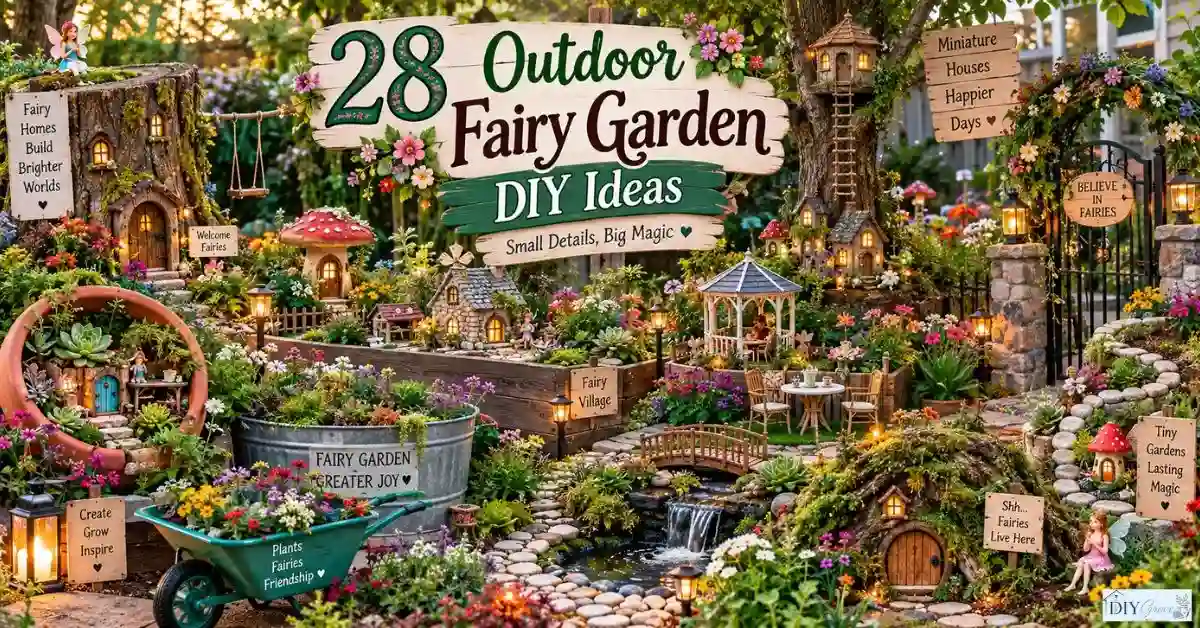
An outdoor fairy garden DIY is a charming way to turn a small backyard corner, planter, tree base, or garden bed into a magical miniature world. With tiny fairy houses, winding pebble paths, moss, flowers, bridges, and woodland accents, you can create a garden that feels whimsical without requiring a large space or complicated skills.
Whether you prefer a rustic cottage, colorful fairy village, or natural woodland setting, there are plenty of creative ways to personalize your display. The best part is that you can mix simple DIY elements with plants and decorations. You already have to create a unique little retreat that looks beautiful throughout the season.
Tree Stump Fairy Cottage

An old tree stump can become a beautiful focal point for an outdoor fairy garden instead of being removed or left unused. Its natural bark, roots, and uneven shape already resemble a tiny woodland home, making it an ideal base for a miniature fairy cottage.
Start by placing a small outdoor-safe fairy door against the stump, preferably near the base where it looks naturally connected to the tree. Create a tiny entrance with flat stones, then add a winding pebble path leading through the surrounding greenery. Moss, miniature mushrooms, ferns, and small flowering plants can soften the edges and make the cottage feel like part of the garden rather than a decoration simply placed on top.
For a more convincing fairy garden, keep the design slightly natural and imperfect. Let some of the original bark remain visible and arrange plants at different heights around the stump. A few carefully chosen details, such as a tiny bench, lantern, mailbox, or flower pot, can add personality without making the space look overcrowded.
Broken Pot Fairy Garden

A broken terracotta pot can become a charming multi-level fairy garden instead of ending up in the trash. Arrange the broken pieces to create little terraces, then add a tiny fairy house, pebbled pathways, moss, miniature flowers, and a few woodland details throughout the spaces.
Keep the largest piece as the main structure and use the smaller fragments to form steps or borders. Let the plants grow naturally around the edges so the finished garden feels like a tiny enchanted landscape rather than a collection of decorations.
Mossy Fairy House Garden

A mossy fairy house feels right at home in a shaded garden where greenery can soften the miniature structure. Place a small cottage among moss, ferns, stones, and low-growing plants to create the feeling of a tiny woodland home hidden beneath the trees.
Add a narrow pebble path leading to the door and surround the house with a few simple details such as mushrooms, miniature flowers, or small pieces of bark. Keeping the colors natural and earthy will help the fairy house blend beautifully into its outdoor surroundings.
Mini Fairy Garden in a Wheelbarrow

An old wheelbarrow makes a fun portable container for a mini fairy garden and gives you plenty of room to create a tiny landscape. Fill it with soil, then arrange a fairy cottage, winding path, small plants, and miniature accessories at different heights.
For extra visual interest, use the wheelbarrow’s length to create a miniature journey from one end to the other. A tiny bridge, garden gate, mushrooms, or small flowering plants can make the space feel like a complete fairy village while keeping the entire project compact and easy to display.
Enchanted Fairy Garden in a Planter

A planter is an easy way to create an enchanted fairy garden when you want a compact display that can fit on a patio, porch, or garden corner. Fill it with a small fairy cottage, moss, low-growing plants, stones, and miniature accessories to create a complete little landscape.
Vary the heights and textures to make the planter feel more dimensional. Let trailing greenery spill over the edge while a tiny pathway leads toward the fairy house, creating the illusion of a hidden miniature world growing inside an ordinary garden container.
Fairy Garden Around a Tree Base

The base of a mature tree can provide a naturally sheltered spot for an outdoor fairy garden. Use the exposed roots and surrounding soil as part of the design, adding a tiny cottage, stones, moss, and small plants that follow the shape of the tree.
A curved pebble path can make the garden feel larger while guiding the eye around the trunk. Keep decorations close to the ground and leave plenty of space around the tree so the roots remain undisturbed and the miniature garden can blend naturally into the surrounding landscape.
Tiny Fairy Village with Multiple Houses

Creating several tiny houses together turns a simple fairy garden into a miniature village with its own little streets and gathering spaces. Give each house a slightly different appearance, then connect them with pebble paths so the whole display feels like one thoughtfully planned community.
Add small fences, garden beds, bridges, benches, or tiny outdoor tables between the houses to make the village feel lived in. Using different heights and placing some cottages farther back will add depth while keeping the overall arrangement natural and easy to explore visually.
Fairy Garden with a Miniature Bridge

A miniature bridge can instantly make a fairy garden feel like a tiny woodland adventure. Place a small wooden bridge over a narrow bed of pebbles, moss, or a shallow dry stream, then connect it to a winding pathway leading toward a fairy house or another miniature feature.
Surround the bridge with natural stones, ferns, flowers, and moss to make it blend into the garden. A few tiny mushrooms or woodland accessories around the entrance can add charm without making the scene feel overcrowded.
Fairy Garden with a Pebble Path

A pebble path gives a fairy garden a clear sense of direction while making the miniature landscape feel more complete. Create a narrow curved trail that leads from the garden entrance toward a fairy cottage, gate, tree stump, or another focal point.
Use small smooth stones and vary the curve instead of making the pathway perfectly straight. Add moss, low-growing plants, and tiny flowers along the edges so the path looks naturally established and blends seamlessly with the surrounding garden.
Fairy Garden with a Miniature Pond

A miniature pond can become the peaceful centerpiece of an outdoor fairy garden. Keep the water feature small and natural-looking, surrounding it with smooth stones, moss, tiny plants, and a few carefully chosen fairy accessories.
Add a small bridge or pebble path beside the pond to make the miniature landscape more interesting. A tiny bench, fairy cottage, or cluster of flowers nearby can create the feeling of a quiet little retreat while keeping the pond as the main focal point.
Fairy Garden with a Tiny Waterfall

A tiny waterfall can give an outdoor fairy garden a peaceful focal point while adding movement and natural charm. Build the miniature landscape around stacked stones, with the water gently cascading into a small basin or pond surrounded by moss and low-growing plants.
Place a fairy cottage, pebble path, or miniature bridge nearby to connect the waterfall with the rest of the garden. Keep the surrounding decorations simple so the flowing water and natural stones remain the main attraction.
“Dive In If you’d like to expand this water feature into a full garden centerpiece, these DIY solar fountains ideas offer more ways to add gentle, sunlight-powered movement to your backyard.“
Fairy Garden with a Wooden Fairy Door

A wooden fairy door is a simple way to turn an ordinary tree, stump, or garden wall into the entrance to a tiny hidden world. Choose a door with a natural wood finish and position it where it looks like it belongs within the surrounding landscape.
Create a small pathway leading to the door with pebbles or flat stones, then soften the area with moss, ferns, flowers, and tiny woodland details. A miniature lantern, mailbox, or small bench can add personality while keeping the door as the main focal point.
Fairy Garden with a Miniature Treehouse

A miniature treehouse gives an outdoor fairy garden a playful vertical element and creates the feeling of a tiny home hidden among the branches. Use a sturdy garden tree or a strong natural structure as the setting, keeping the treehouse lightweight and securely positioned.
Add a tiny ladder, balcony, pebble path, and a few woodland plants around the base to connect the elevated house with the rest of the garden. Moss and natural wood details can help the treehouse blend into the landscape while making the entire scene feel like a miniature woodland retreat.
Fairy Garden with a Rustic Fence

A rustic fence can give a fairy garden a defined little boundary while making the miniature space feel like a real garden. Use natural-looking twigs or small wooden pieces to create an imperfect fence around a fairy cottage, flower bed, or tiny village.
Add a small gate and a pebble path to make the enclosure feel purposeful rather than decorative. Let moss, flowers, and greenery grow around the fence so it blends naturally with the surrounding garden.
Fairy Garden with a Tiny Stone Cottage

A tiny stone cottage brings a natural, storybook feel to an outdoor fairy garden. Build the miniature home with small stones in different shapes and tones, then add a simple wooden door and a few small windows to give the cottage character.
Surround the cottage with moss, pebbles, ferns, and tiny flowers so it looks established within the landscape. A narrow stone pathway leading to the entrance can tie the cottage into the rest of the fairy garden without requiring many extra decorations.
Fairy Garden with a Mushroom House

A mushroom house can become the most playful focal point in a fairy garden, especially when surrounded by natural woodland details. Place a rounded mushroom-style cottage among moss, small plants, stones, and tiny flowers to create the look of a hidden fairy home.
Keep the surrounding decorations earthy and natural so the mushroom house stands out without overwhelming the garden. A small pathway, miniature fence, or tiny bench near the entrance can complete the scene and make the little cottage feel like part of a larger fairy village.
Fairy Garden with a Miniature Garden Gate

A miniature garden gate can make an outdoor fairy garden feel like it has a real entrance to a tiny hidden world. Position a small wooden gate at the beginning of a pebble path, with a miniature fence extending around a cottage, flower bed, or fairy village.
Surround the gate with moss, flowers, small stones, and low-growing greenery to help it blend into the garden. A tiny lantern or a few miniature mushrooms near the entrance can add character while keeping the gate as the main focal point.
“For a bigger seasonal entrance statement in the same backyard, these pumpkin archway DIY ideas can help you build a full-size version of that welcoming gateway feel.”
Fairy Garden with a Fairy Swing

A tiny swing adds a playful touch to an outdoor fairy garden and works especially well beneath a small tree or sturdy garden structure. Hang a miniature wooden swing from a secure branch and position it near a fairy cottage, pathway, or small village.
Create a soft woodland setting around the swing with moss, ferns, flowers, and small stones. Keep the surrounding decorations simple so the swing remains easy to notice and gives the fairy garden a charming little activity area.
Fairy Garden with a Tiny Outdoor Table

A tiny outdoor table can make a fairy garden feel like a miniature home with its own cozy gathering space. Place a small table and chairs near a fairy cottage or beneath a leafy plant, then add a tiny flower pot or simple miniature table setting for extra character.
Use a pebble path to connect the seating area with the rest of the garden and surround it with low-growing flowers, moss, and greenery. Keeping the furniture small and the decorations understated will make the scene feel charming and naturally integrated into the landscape.
Fairy Garden with a Miniature Gazebo

A miniature gazebo can give an outdoor fairy garden a beautiful focal point and create the feeling of a tiny gathering space. Place a small wooden gazebo among flowers, moss, and greenery, then add a miniature bench or table inside to make it feel inviting.
Connect the gazebo to the rest of the garden with a narrow pebble path and surround it with low-growing plants. A nearby fairy cottage or a few woodland accessories can help turn the gazebo into part of a larger miniature landscape.
Fairy Garden with a Spiral Stone Path

A spiral stone path can make a small fairy garden feel more interesting by creating movement and drawing attention toward a central feature. Arrange small natural stones in a gentle spiral that leads toward a fairy cottage, miniature tree, or another focal point.
Keep the stones relatively close together and allow a little moss or ground cover to appear between them for a natural look. Surround the path with tiny flowers, ferns, and woodland details while leaving enough open space for the spiral shape to remain clearly visible.
Fairy Garden with Solar Lights

Solar lights can make an outdoor fairy garden especially inviting after sunset while adding a practical glow to miniature pathways and focal points. Choose small outdoor-rated lights and position them along a path, beside a fairy house, or around a miniature feature.
Keep the lighting subtle rather than covering the entire garden with bright bulbs. Warm-white illumination works beautifully with natural stones, moss, and wooden decorations, creating a cozy evening scene while allowing the fairy garden details to remain visible.
“For more handmade sparkle around your outdoor space, try pairing your garden lights with these suncatcher DIY ideas for a colorful daytime glow too.”
Fairy Garden with Colorful Fairy Houses

Colorful fairy houses can turn a simple outdoor garden into a cheerful miniature village. Choose a few cottages in complementary colors and arrange them at different distances so each one feels like part of the same tiny community.
Connect the houses with small pebble paths and add simple details such as flower pots, fences, mushrooms, or tiny benches. Keeping the surrounding plants natural and green will help the colorful cottages stand out without making the garden feel too busy.
“Get the Full Idea If you love this whimsical storybook feel, you’ll also enjoy these DIY Alice in Wonderland decorations for bringing the same magical charm to your next themed event.”
Fairy Garden with Succulents and Miniatures

Succulents are a great choice for a fairy garden when you want interesting shapes and a low-maintenance miniature landscape. Combine several small varieties around a fairy house, pathway, or tiny garden feature to create layers without needing many decorations.
Use gravel, small stones, and miniature accessories to complement the structured shapes of the succulents. Leave enough space between plants for growth and choose a container or garden spot with suitable drainage so the miniature landscape stays healthy.
Fairy Garden with Wildflowers and Woodland Details

Wildflowers can make a fairy garden feel like a tiny cottage tucked into a natural woodland meadow. Surround a miniature fairy house with small flowering plants, ferns, moss, stones, and pieces of bark to create a relaxed landscape rather than a perfectly manicured display.
Let the flowers and greenery grow with a slightly informal arrangement so the garden feels naturally established. A simple pebble path, tiny fence, or miniature lantern can add a few magical details while keeping the wildflowers and woodland textures as the main focus.
Fairy Garden in a Galvanized Tub

A galvanized tub makes a practical container for creating a larger outdoor fairy garden without planting directly in the ground. Its wide shape gives you room to build a miniature landscape with a fairy cottage, winding path, small plants, stones, and several decorative details.
Arrange taller plants toward the back and keep the miniature features closer to the front so everything remains visible. A few trailing plants around the edges can soften the metal container and help the finished fairy garden blend naturally with the surrounding backyard.
Tiered Outdoor Fairy Garden

A tiered layout is a smart way to give an outdoor fairy garden more depth, especially when working with a small space. Create two or three distinct levels using natural stones, raised sections, or sturdy garden containers, then give each level its own miniature feature.
Connect the tiers with a winding pathway or tiny bridge so the garden feels like one continuous fairy landscape. Place taller elements toward the back and smaller details toward the front to keep the different levels visible and create a more dimensional finished design.
Whimsical Fairy Village in a Raised Garden Bed

A raised garden bed gives you plenty of space to create a complete fairy village with several cottages, pathways, plants, and miniature gathering areas. Instead of filling the bed with decorations alone, divide it into small sections so the village has a natural flow from one area to another.
Use winding paths to connect the houses and add a few recognizable features such as a tiny bridge, garden gate, fence, gazebo, or outdoor table. Mixing greenery with the miniature structures will make the raised bed feel like a real little community hidden inside your backyard garden.
How to Make an Outdoor Fairy Garden
Creating an outdoor fairy garden is easier than it looks. Start with a suitable garden spot, then build a small landscape with plants, pathways, fairy houses, and a few weather-resistant details.
Keep the design simple and natural so your miniature garden feels like part of the surrounding landscape rather than a collection of decorations.
- Choose a location: Pick a spot with suitable sunlight and good drainage.
- Plan the layout: Decide where the fairy house, pathway, plants, and accessories will go.
- Add the plants: Use small, low-growing plants that fit the scale of your garden.
- Create pathways: Use pebbles, small stones, or bark pieces for miniature walkways.
- Add fairy features: Include cottages, doors, bridges, fences, gates, or tiny furniture.
- Layer the design: Place taller plants and structures toward the back and smaller details in front.
- Secure decorations: Use outdoor-safe materials and secure lightweight pieces against wind.
- Leave growing space: Avoid overcrowding so plants have room to spread and stay healthy.
Outdoor Fairy Garden Tips
A few thoughtful choices can keep your fairy garden attractive and easier to maintain. Focus on durable decorations, suitable plants, and a layout that works with your existing outdoor space.
- Use weather-resistant decor: Choose materials designed for outdoor conditions.
- Protect delicate pieces: Bring fragile accessories indoors during severe weather.
- Avoid overcrowding: Leave enough space for plants and miniature features to stand out.
- Use natural elements: Moss, stones, bark, and twigs help create an authentic woodland look.
- Match plant sizes: Choose plants that won’t quickly overwhelm the miniature scene.
- Keep pathways visible: Make paths wide enough to remain noticeable as plants grow.
- Check drainage: Prevent standing water in containers and raised fairy gardens.
- Refresh seasonally: Replace damaged decorations and trim overgrown plants when needed.
“If cats also share this backyard space, these catios ideas for cats can help you add a safe, cozy corner for them near your fairy garden.”
FAQs
What plants are best for an outdoor fairy garden?
Small, low-growing plants such as moss, creeping thyme, miniature ferns, sedum, and compact ground covers work well. Choose plants that match your garden’s sunlight, moisture, and climate conditions.
How do you keep a fairy garden alive outdoors?
Choose plants suited to the location, provide proper drainage, and water according to their needs. Regularly trim overgrown plants and remove damaged leaves or decorations to keep the miniature landscape balanced.
Can fairy garden decorations stay outside year round?
Some can, especially decorations made from weather-resistant resin, stone, treated wood, or metal. Fragile ceramic, untreated wood, and delicate accessories may need to be brought indoors during freezing temperatures, heavy storms, or extreme weather.
How much does it cost to make an outdoor fairy garden?
A simple outdoor fairy garden can cost around $15 to $50, while a larger village with multiple houses, plants, pathways, and accessories may cost $75 or more. Using existing pots, stones, wood, and garden plants can keep the budget low.
Where is the best place to put a fairy garden?
Choose a location based on the plants you want to grow and the amount of sunlight they need. A garden bed, tree base, shaded corner, patio container, or raised planter can all work well as long as the area has suitable drainage and enough room for maintenance.
Conclusion
Creating an outdoor fairy garden is a fun way to turn an ordinary backyard corner into a charming miniature world. From tree stump cottages and colorful fairy houses to tiny bridges, ponds, wildflowers, and whimsical villages, there are countless ways to make your space unique.
Start with one simple idea and build it with plants, stones, and a few magical details that match your style. Save this post to revisit your favorite ideas, share it with a fellow DIY lover, and start creating your own enchanting fairy garden today!